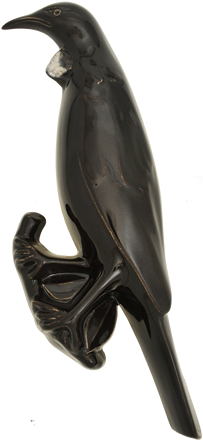



Standing Tui
COLOR: Tar Black [1]
SIZE: One Size
PRODUCT CODE: wbtui_1
SIZE: One Size
PRODUCT CODE: wbtui_1
NZD
$166.00 Enquire About This Product
Please send your enquiry to us and we will endeavour to answer it within the next business day.
Delivery charges and payment. When an order is placed via the email order system. Unless otherwise requested, New Zealand delivery is by courier and international orders by Air Post which is charged at Checkout.
Standing Tui - One Size
PRODUCT CODE: WBTUI_1
NZD
$166Delivery
We deliver worldwide. International orders are sent exclusive of GST (Goods and Services Tax of 15%) which is deducted at checkout.
Dimensions
WIDTH: 18.0cmHEIGHT: 40.0cm
DEPTH: 7.0cm
WEIGHT: 900.0gm